Self-supporting community based mitigation program to provide arsenic safe water



Narrative
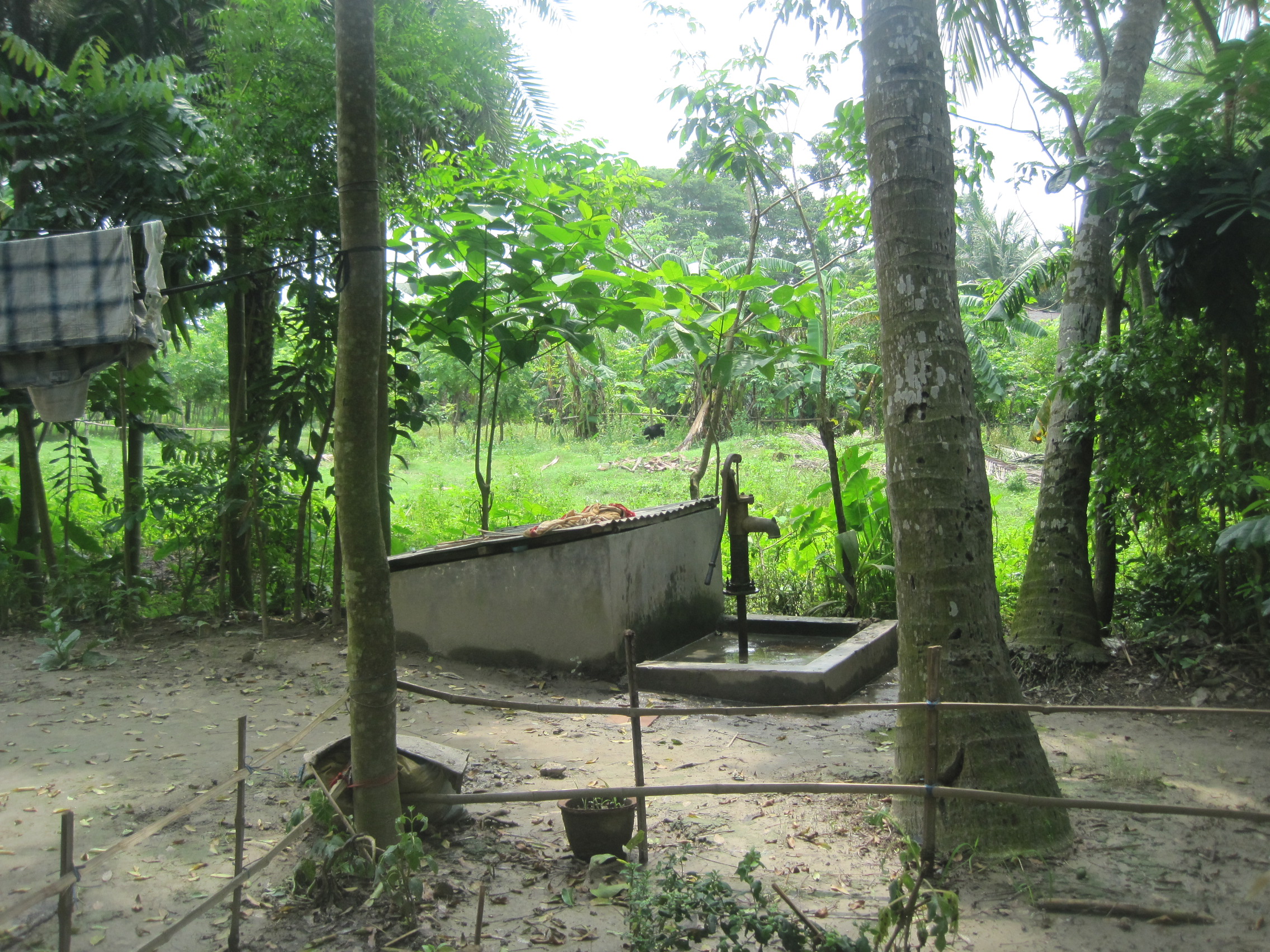
In total 11 dugwells were constructed. As of September 2006 in total 150 people (34 families) were using water from 8 dugwells. Water from three dugwells were not used due to local political reasons. Now PW45, a dugwell has been closed and water from a deep tubewell (that was constructed later) is being used. The arsenic concentration of the deep tubewell is high, 253 PPB as of November 7 2007, but still this backward, poor community, choose to use the contaminated water .
-
Laltu Mirza of Project WellImplementation Status: completed Sat 15 Feb 2014, Over 12 Years ago
pw47 set washer today.
-
Laltu Mirza of Project WellImplementation Status: completed Sat 15 Feb 2014, Over 12 Years ago
pw46 pipe repair today.
-
Laltu Mirza of Project WellImplementation Status: completed Sat 15 Feb 2014, Over 12 Years ago
pw47 set washer today.
-
Suparna Mondol of Project WellImplementation Status: completed Fri 14 Feb 2014, Over 12 Years ago
Chatra netaji balika sikkha niketon h.s. projector programme has been finished. St-166.
-
Farida Bibi of Project WellImplementation Status: completed Wed 15 Jan 2014, Over 12 Years ago
pw43 there is 9ft of water 500ml theoline 19families 75peopke used for drinking and cooking
-
Farida Bibi of Project WellImplementation Status: completed Thu 28 Nov 2013, Over 12 Years ago
pw46 set checkvalve today.
-
Farida Bibi of Project WellImplementation Status: completed Tue 26 Nov 2013, Over 12 Years ago
pw46 there is 16ft of water 1l theoline 10families 67people good water
-
Laltu Mirza of Project WellImplementation Status: completed Thu 21 Nov 2013, Over 12 Years ago
pw17 set checkvalve.nut and pipe repair
-
Jyotsna Sarkar of Project WellImplementation Status: completed Tue 19 Nov 2013, Over 12 Years ago
Office attended by safikul and champa Arsenic test for site selection. three sample no Arsenic and two sample high arsenic.
-
Laltu Mirza of Project WellImplementation Status: completed Wed 06 Nov 2013, Over 12 Years ago
pw38 set chcekvalv,nut tnday.
-
Laltu Mirza of Project WellImplementation Status: completed Wed 30 Oct 2013, Over 12 Years ago
pw43 set washer,chcekvalve,nut and planjar today.
-
Farida Bibi of Project WellImplementation Status: completed Tue 29 Oct 2013, Over 12 Years ago
pw44 we are giving folders and collecting water
-
Farida Bibi of Project WellImplementation Status: completed Tue 29 Oct 2013, Over 12 Years ago
pw43 we are giving folders and collecting watar
-
Safikul Molla of Project WellImplementation Status: completed Thu 24 Oct 2013, Over 12 Years ago
Office work( write arsenic report and excel file work).
-
Safikul Molla of Project WellImplementation Status: completed Thu 10 Oct 2013, Over 12 Years ago
Office work( write arsenic report and stock register khata).
-
Laltu Mirza of Project WellImplementation Status: completed Thu 10 Oct 2013, Over 12 Years ago
pw29 there is 16ft water.500ml theoline was given.9families 30people.used for drinkig and cooking.
-
Suparna Mondol of Project WellImplementation Status: completed Fri 20 Sep 2013, Over 12 Years ago
Projector programme has been finished. ST. ANNE'S HIGH SCHOOL. Neer by pw-10. Te= M-4, F-3, St-150.
-
Farida Bibi of Project WellImplementation Status: completed Mon 16 Sep 2013, Over 12 Years ago
pw44 there is 9ft of water 500ml theoline 4families 16people used for cooking
-
Suparna Mondol of Project WellImplementation Status: completed Tue 10 Sep 2013, Over 12 Years ago
We went to inspect the dugwell no pw-43.
-
Suparna Mondol of Project WellImplementation Status: completed Tue 10 Sep 2013, Over 12 Years ago
We went to inspect the dugwell no pw-36.
-
Suparna Mondol of Project WellImplementation Status: completed Tue 10 Sep 2013, Over 12 Years ago
We went to inspect the dugwell no pw-26.
-
Laltu Mirza of Project WellImplementation Status: completed Wed 04 Sep 2013, Almost 13 Years ago
pw47 set washer today.
-
Farida Bibi of Project WellImplementation Status: completed Tue 27 Aug 2013, Almost 13 Years ago
pw26 we are doing health metting -total-M10-F-7-CH-8
-
Farida Bibi of Project WellImplementation Status: completed Tue 27 Aug 2013, Almost 13 Years ago
pw23 we are doing health metting -total-M-5-F-6-CH-4
-
Animesh sarkar of Project WellImplementation Status: completed Thu 22 Aug 2013, Almost 13 Years ago
p.w. - 29 i have given a handover package
-
Farida Bibi of Project WellImplementation Status: completed Tue 20 Aug 2013, Almost 13 Years ago
pw43 there is 6ft water 200ml theoline 15families 62people good water used for drinking and cooking
-
Farida Bibi of Project WellImplementation Status: completed Tue 20 Aug 2013, Almost 13 Years ago
pw35 we are doing health metting -M3 -F8-C4
-
Farida Bibi of Project WellImplementation Status: completed Mon 19 Aug 2013, Almost 13 Years ago
pw26 there is 6ft water 300ml theoline good water 10families 52people drinking and cooking
-
Suparna Mondol of Project WellImplementation Status: completed Tue 06 Aug 2013, Almost 13 Years ago
Pw-50. Health meeting has been finished . M-7,F-18, Ch-9.
-
Shilpi Poddar of Project WellImplementation Status: completed Mon 05 Aug 2013, Almost 13 Years ago
Water collection for annual arsenic test.
-
Laltu Mirza of Project WellImplementation Status: completed Sat 03 Aug 2013, Almost 13 Years ago
pw38 set washer and check- valve today.
-
Farida Bibi of Project WellImplementation Status: completed Wed 24 Jul 2013, Almost 13 Years ago
pw29 good water 500ml theoline war given 10families 35people used for drinking and cooking
-
Safikul Molla of Project WellImplementation Status: completed Sun 07 Jul 2013, Almost 13 Years ago
Office meeting attended by alpana,jayanto,farida,laltu,biswajit,prasun,animesh,aparna,shilpi,champa,shikha,ranajit,& safikul.
-
Farida Bibi of Project WellImplementation Status: completed Mon 01 Jul 2013, Almost 13 Years ago
pw46 i had repair washer done today
-
Farida Bibi of Project WellImplementation Status: completed Sat 29 Jun 2013, Almost 13 Years ago
pw43 did survey and gave theoline good water 500g theoline 15families 62people
-
Suparna Mondol of Project WellImplementation Status: completed Wed 26 Jun 2013, Almost 13 Years ago
Pw-38. This dugwell need the maintenance. Mohisa/Habra. Forida. Shilpi.
-
Suparna Mondol of Project WellImplementation Status: completed Wed 26 Jun 2013, Almost 13 Years ago
Pw-35. Health meeting has been finished . M-1,F-4, Ch-1. Netaji polli/ Habra.
-
Farida Bibi of Project WellImplementation Status: completed Wed 26 Jun 2013, Almost 13 Years ago
pw35 need the maintenance kharo habra
-
Suparna Mondol of Project WellImplementation Status: completed Wed 26 Jun 2013, Almost 13 Years ago
Good water. 4 ft water. 9 families, 47 people. Used for cooking and drinking. Kharo/ Habra.
-
Suparna Mondol of Project WellImplementation Status: completed Wed 12 Jun 2013, Almost 13 Years ago
Office meeting.Aparna,Shilpi, Shikha,Champa,Ranojit, Animesh, Laltu, Forida, Bishwajit, Safikul.
-
Jyotsna Sarkar of Project WellImplementation Status: completed Tue 11 Jun 2013, Almost 13 Years ago
Office attended Safikul and Champa.
-
Safikul Molla of Project WellImplementation Status: completed Tue 11 Jun 2013, Almost 13 Years ago
Office attended Champa&Safikul are office work and arsenik test.
-
Jyotsna Sarkar of Project WellImplementation Status: completed Mon 10 Jun 2013, Almost 13 Years ago
Office attended Safikul ,Farida and Champa.
-
Jyotsna Sarkar of Project WellImplementation Status: completed Sat 08 Jun 2013, About 13 Years ago
Office attended Safikul and Champa Arsenic Test.
-
Jyotsna Sarkar of Project WellImplementation Status: completed Thu 06 Jun 2013, About 13 Years ago
Office attended Safikul and Champa Arsenic Test.
-
Jyotsna Sarkar of Project WellImplementation Status: completed Wed 05 Jun 2013, About 13 Years ago
Office attended Safikul,Farida Shilpi,Champa,Aparna, Animesh and Biswajit.
-
Ranajit Bala of Project WellImplementation Status: completed Sun 02 Jun 2013, About 13 Years ago
today at field office meeting all staff are present.
-
Farida Bibi of Project WellImplementation Status: completed Sat 01 Jun 2013, About 13 Years ago
Office Attented Safikul ,Farida and Champa Arsenic Test.
-
Jyotsna Sarkar of Project WellImplementation Status: completed Thu 30 May 2013, About 13 Years ago
Office attended Safilul and Champa Arsenic Test.
-
Jyotsna Sarkar of Project WellImplementation Status: completed Wed 29 May 2013, About 13 Years ago
Office meeting attended Safikul ,Laltu , Arimesh,Farida, Biswajit ,Aparna ,Shilpi and Champa.
-
Jyotsna Sarkar of Project WellImplementation Status: completed Mon 20 May 2013, About 13 Years ago
Office attended Safikul and champa Arsenic Test.
-
Jyotsna Sarkar of Project WellImplementation Status: completed Mon 06 May 2013, About 13 Years ago
Attented Safikul and champa or Farida Arsenic Test..
-
Suparna Mondol of Project WellImplementation Status: completed Fri 03 May 2013, About 13 Years ago
Pw-23. Projector programme has been finished. M-3, F-15, Ch-16. Ranihati/ Degonga.
-
Jyotsna Sarkar of Project WellImplementation Status: completed Wed 24 Apr 2013, About 13 Years ago
Office metting attented Farida,Biswajit. Safikul,Laltu, Aparna,Animesh, Shilpi and Champa
-
Jyotsna Sarkar of Project WellImplementation Status: completed Mon 22 Apr 2013, About 13 Years ago
Office attended Safikul and champa or Farida Arsenic Test.
-
Jyotsna Sarkar of Project WellImplementation Status: completed Wed 10 Apr 2013, About 13 Years ago
Office meeting attended Safikul. Aparna ,Animesh, Shilpi and Champa.Ranajit, Shikha, Farida,Biswajit.
-
Jyotsna Sarkar of Project WellImplementation Status: completed Tue 09 Apr 2013, About 13 Years ago
Office attended Safikul and champa Arsenic Test.
-
Jyotsna Sarkar of Project WellImplementation Status: completed Wed 03 Apr 2013, About 13 Years ago
office metting attented Safikul. Aparna ,Animesh, Shilpi and Champa.
-
Jyotsna Sarkar of Project WellImplementation Status: completed Tue 02 Apr 2013, About 13 Years ago
office meeting attended Safikul and champa Arsenic Test.
-
Jyotsna Sarkar of Project WellImplementation Status: completed Thu 28 Mar 2013, About 13 Years ago
office meeting attended Safikul and champa Arsenic Test.
-
Jyotsna Sarkar of Project WellImplementation Status: completed Wed 20 Mar 2013, About 13 Years ago
office metting attented Safikul. Aparna ,Animesh, Shilpi and Champa.
-
Jyotsna Sarkar of Project WellImplementation Status: completed Tue 19 Mar 2013, About 13 Years ago
office Attented Safikul and champa , Farida Arsenic Test.
-
Jyotsna Sarkar of Project WellImplementation Status: completed Mon 18 Mar 2013, About 13 Years ago
office Attented Safikul and champa Arsenic Test.
-
Jyotsna Sarkar of Project WellImplementation Status: completed Wed 13 Mar 2013, About 13 Years ago
office metting attented Safikul.Farida Aparna ,Animesh, Shilpi and Champa.
-
Jyotsna Sarkar of Project WellImplementation Status: completed Tue 12 Mar 2013, About 13 Years ago
Office Attented Safikul and champa Arsenic Test.
-
Jyotsna Sarkar of Project WellImplementation Status: completed Mon 11 Mar 2013, About 13 Years ago
Office Attented Safikul and champa Arsenic Test.
-
Jyotsna Sarkar of Project WellImplementation Status: completed Wed 06 Mar 2013, Over 13 Years ago
Office metting attented Safikul.Farida ,Aparna Biswajit ,Animesh, Laltu, Shilpi and Champa.
-
Shilpi Poddar of Project WellImplementation Status: completed Fri 01 Mar 2013, Over 13 Years ago
Pw29 . Projector programme has been finished. M
-
Shilpi Poddar of Project WellImplementation Status: completed Fri 01 Mar 2013, Over 13 Years ago
Pw29 . Projector programme has been finished. M -12, f-10, ch-3.
-
Suparna Mondol of Project WellImplementation Status: completed Fri 01 Mar 2013, Over 13 Years ago
Pw-29. Projector programme has been finished. M-12, F-10,Ch-3.
-
Safikul Molla of Project WellImplementation Status: completed Sat 23 Feb 2013, Over 13 Years ago
supply of raw material for construction of 20 wells - pvc reducer-40 piece,,10 footx8inch pvc pipes - 20 pieces, HDPF pipes 2 rolls,,HDPF filter 7 pieces, HDPF point 20 pieces.
-
Jyotsna Sarkar of Project WellImplementation Status: completed Thu 21 Feb 2013, Over 13 Years ago
Office Attented Safikul and champa Arsenic Test.
-
Jyotsna Sarkar of Project WellImplementation Status: completed Tue 12 Feb 2013, Over 13 Years ago
Office Attented Safikul and champa Arsenic Test.
-
Jyotsna Sarkar of Project WellImplementation Status: completed Fri 08 Feb 2013, Over 13 Years ago
Attented Safikul and champa Arsenic Test.
-
Safikul Molla of Project WellImplementation Status: completed Tue 05 Feb 2013, Over 13 Years ago
Office attended Champa&Safikul are office work and arsenik test.
-
Jyotsna Sarkar of Project WellImplementation Status: completed Tue 29 Jan 2013, Over 13 Years ago
office Attented Safikul and champa Arsenic Test.
-
Safikul Molla of Project WellImplementation Status: completed Thu 24 Jan 2013, Over 13 Years ago
office attented Champa&Safikul are office work and arsenik test.
-
Jyotsna Sarkar of Project WellImplementation Status: completed Tue 22 Jan 2013, Over 13 Years ago
office Attented Safikul and champa Arsenic Test.
-
Jyotsna Sarkar of Project WellImplementation Status: completed Thu 10 Jan 2013, Over 13 Years ago
attented Safikul adn Champa Arsenic Test.
-
Farida Bibi of Project WellImplementation Status: completed Tue 08 Jan 2013, Over 13 Years ago
pw20 pw21 close
-
Suparna Mondol of Project WellImplementation Status: completed Wed 02 Jan 2013, Over 13 Years ago
Pw10. Office meeting. Forida,aparna, champa,shilpi, laltu, biswajit, safikul.
-
Farida Bibi of Project WellImplementation Status: completed Sat 29 Dec 2012, Over 13 Years ago
pw12 31 6 7 and other side closer surva
-
Safikul Molla of Project WellImplementation Status: completed Sat 29 Dec 2012, Over 13 Years ago
office attented Champa&Safikul are office work and arsenik test.
-
Jyotsna Sarkar of Project WellImplementation Status: completed Thu 27 Dec 2012, Over 13 Years ago
Safikul and Champa attended office to do Arsenic tests of the water samples collected for site selection.
-
Jyotsna Sarkar of Project WellImplementation Status: completed Sat 22 Dec 2012, Over 13 Years ago
Attented Safikul are Champa Arsenik Test.
-
Jyotsna Sarkar of Project WellImplementation Status: completed Fri 21 Dec 2012, Over 13 Years ago
Attented Safikul and Champa Arsenik Test.
-
Ranajit Bala of Project WellImplementation Status: completed Thu 20 Dec 2012, Over 13 Years ago
SITE SELECTION.land donar HARIKISMA SARDAR GO COD N23.04584/E088.63237
-
Shikha Majumdar of Project WellImplementation Status: completed Thu 20 Dec 2012, Over 13 Years ago
SITE SELCTION AND WATTAR CULLECT.LAND DONAR PARSH DAS GO COD N23.04047)E088.63229
-
Farida Bibi of Project WellImplementation Status: completed Wed 19 Dec 2012, Over 13 Years ago
there is 6ft of water 500ml theoline was given 8families 28people g�od water used for drinking and cooking
-
Farida Bibi of Project WellImplementation Status: completed Wed 19 Dec 2012, Over 13 Years ago
there is 7ft of water 12families 40people good water used for drinking and cooking
-
Jyotsna Sarkar of Project WellImplementation Status: completed Tue 18 Dec 2012, Over 13 Years ago
Attented Safikul and Champa Arsenik test.
-
Jyotsna Sarkar of Project WellImplementation Status: completed Mon 17 Dec 2012, Over 13 Years ago
Attented Safikul are Champa Arsenik test.
-
Farida Bibi of Project WellImplementation Status: completed Mon 17 Dec 2012, Over 13 Years ago
site selection .owner name majed mandal E7409 N68021
-
Farida Bibi of Project WellImplementation Status: completed Sat 15 Dec 2012, Over 13 Years ago
site selection and water collcet owner name bapi mondal.E81584 N75392.
-
Jyotsna Sarkar of Project WellImplementation Status: completed Thu 13 Dec 2012, Over 13 Years ago
well is used by 8 families,40 people.
-
Jyotsna Sarkar of Project WellImplementation Status: completed Wed 12 Dec 2012, Over 13 Years ago
metting attented - forida, aparna, champa, laltu, shilpi, safikul, animesh, biswajit. Arsenic testing.
-
Jyotsna Sarkar of Project WellImplementation Status: completed Tue 11 Dec 2012, Over 13 Years ago
attented Safikul are Champa Arsenik test.
-
Farida Bibi of Project WellImplementation Status: completed Tue 11 Dec 2012, Over 13 Years ago
site selection and water collcet bagjola owaner name moksed
-
Farida Bibi of Project WellImplementation Status: completed Tue 11 Dec 2012, Over 13 Years ago
site selection and water collcet bagjola owaner name moksed e78577 n74442
-
Farida Bibi of Project WellImplementation Status: completed Mon 10 Dec 2012, Over 13 Years ago
site selection and water collect saguna panchayad e87520 N83394
-
Farida Bibi of Project WellImplementation Status: completed Mon 10 Dec 2012, Over 13 Years ago
site selection and water collcet waner name swapan sarkar e89750 n84339
-
Jyotsna Sarkar of Project WellImplementation Status: completed Sat 08 Dec 2012, Over 13 Years ago
has been dane of PW50.
-
Jyotsna Sarkar of Project WellImplementation Status: completed Fri 07 Dec 2012, Over 13 Years ago
Attented Safikul are Champa Arsenik Test.
-
Farida Bibi of Project WellImplementation Status: completed Thu 06 Dec 2012, Over 13 Years ago
maintenance successful
-
Jyotsna Sarkar of Project WellImplementation Status: completed Thu 06 Dec 2012, Over 13 Years ago
Attented Safikul and Champa Arsenik Test.
-
Farida Bibi of Project WellImplementation Status: completed Thu 06 Dec 2012, Over 13 Years ago
PW17 maintenance succesful
-
Jyotsna Sarkar of Project WellImplementation Status: completed Wed 05 Dec 2012, Over 13 Years ago
metting attented Farida Animesh Lattu Aparna shilpi Biswjit Asit Safikuk are Champa Arsenik test.
-
Jyotsna Sarkar of Project WellImplementation Status: completed Mon 03 Dec 2012, Over 13 Years ago
attented Safikul are Champa Arsenik test.
-
Animesh sarkar of Project WellImplementation Status: completed Tue 27 Nov 2012, Over 13 Years ago
office today attend meeting Meera Smith,Safikul,Animesh,Laltu.Farida AParna.Champa and prosun.
-
Farida Bibi of Project WellImplementation Status: completed Thu 15 Nov 2012, Over 13 Years ago
pw13 given the handover package
-
Farida Bibi of Project WellImplementation Status: completed Mon 12 Nov 2012, Over 13 Years ago
pw36 given the handover package
-
Meera Hira-Smith of Project WellImplementation Status: completed Thu 23 Jun 2011, Almost 15 Years ago
One of the randomly selected dugwell to test for arsenic
There was no water in the months of April and May 2011. In June the water level is good. 4 families are using that is 14 consumers accoring to the register but verbally they say about 30 persons are using this well.
- Impact Assessment (M&E) Phase Project completed on 15 Apr, 2006 Implementation Phase
- Implementation Phase Project started on 15 May, 2005 Preparation Phase
Self-supporting community based mitigation program to provide arsenic safe water
Narrative
In total 11 dugwells were constructed. As of September 2006 in total 150 people (34 families) were using water from 8 dugwells. Water from three dugwells were not used due to local political reasons. Now PW45, a dugwell has been closed and water from a deep tubewell (that was constructed later) is being used. The arsenic concentration of the deep tubewell is high, 253 PPB as of November 7 2007, but still this backward, poor community, choose to use the contaminated water .
Other Issues
Unusual and unexpected issues faced during project execution
Research and Development is ongoing on the dugwells in which water contains organic odor and high fecal coliform, occurring mainly when the dugwell is fairly new. The water is treated with lime and, in cases of high fecal coliform levels, is also treated regularly with theoline, the disinfectant that contains 5% chlorine. Villagers are advised not to use the water for a few days during the period of shock treatment. Water analysis to measure the concentration of arsenic levels and total and fecal bacteria of all functional dugwells will be routinely done after construction. Also, every summer when the water levels drop, arsenic levels are measured. Project Well keeps a database evaluating the use of the dugwells (see attached newsletter). Consumers are visited monthly by the grassroots level field workers and asked about outbreaks of diarrhea and dysentery among users of each dugwell. In the winters of 2004 and 2005, door-to-door village surveys were carried out to create the database of the existing dugwells and observation of any outbreaks. There have been no such outbreaks linked to any particular dugwell water use over a period of four years.
Learnings
Knowledge of project and process for sharing
Due to odor of chlorine (as found in tap water) and slight organic/earthy smell in three dugwells the use of water is not optimum. To increase its utility locally manufactured (pottery) low cost ($2) earthen filters, that remove the odor and any impurities, are being distributed. Each household pay 25%. Evaluation survey to assess the utility of the dugwells will be done in January 2007.
Impact
People Getting Safe Drinking Water: 400
Total Familes 100
Total Pop 423
Adult 286
Children <18 137
student 85
not student 15
under 5 37
School Children Getting Water: 85
Maintenance/Operating Costs Annual, in US$: $34
Creating and measuring long-term impact
0
Implementer: Project Well & Aqua Welfare Society
Aqua Welfare Society, AWS, is the partner NGO. Their office is based in the North 24 Parganas. The 8 honorary board members are located in Kolkata. There are only 5 field workers who are interacting with the villagers and beneficiaries, training the users on maintenance of the dugwells, organizing village meetings and health meetings. A technical advisor of AWS is based in Kolkata who visits the village occasionally and one awareness programmer who is in charge of awareness programs in the communities and educational institutions. There is an accountant and also a data entry person on part time basis.
Funding
- funded:
- $4,000
- Final Cost:
- $4,000
- edit $4,000:
- Blue Planet Network